-
The Utopia Bedding Quilted Duvet Insert, Explained
-
Why Box-Stitching and Down-Alternative Fill Work Together
-
Matching the Insert to Your Bed: Size Chart
-
Corner Tabs: What They Do and Whether You Need Them
-
Year-Round Comfort with Down-Alternative Fill
-
From Single Comforters to Inserts with Corner Tabs
-
Final Verdict: Is It the Right Insert for You?
If you searched for a 'quilted comforter with corner tabs,' the product you're describing is the Utopia Bedding Down Alternative Duvet Insert. It's a quilted, box-stitched inner layer for a duvet cover, with corner tabs that anchor it. The official size chart lists five standard bed sizes, and the critical fit difference is between the Full and Queen widths. The rule: match the insert to your cover, not your mattress.
The Utopia Bedding Quilted Duvet Insert, Explained
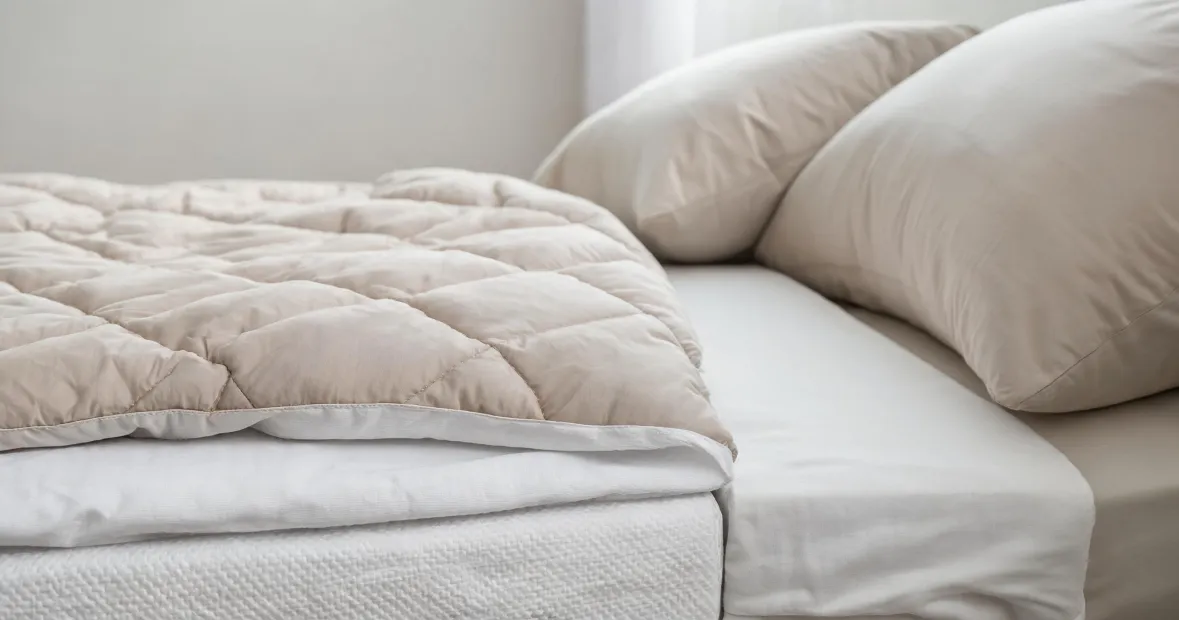
The first thing to understand is that Utopia Bedding sells this as a 'duvet insert' on its official product page, even though the description calls it a 'premium quilted comforter.' Those two labels aren't contradictory: an insert is a comforter's inner layer, built to be used with a removable cover. On the brand's site, the Down Alternative Duvet Insert is listed with a breathable box-stitched design, year-round luxury, and a secure, cozy fit. What's included is a single insert, not a set—so the corner tabs are there to keep that insert attached to your cover, not to decorate the bed. If you came looking for a standalone quilted throw, this is still the right product as long as you pair it with a cover; without one, the insert works as a lightweight comforter on its own, but the tabs will be unused.
That positioning becomes concrete when you look at how Utopia Bedding presents the product across its collections. The same listing that appears under 'Down Alternative Duvet Insert' also carries the brand's standard purchase protections: free shipping and 30-day easy returns. So the risk of ordering the wrong size is limited to time, not money. The insert comes in the five standard bed sizes, from Twin up to California King, and each is sold as a single unit—1x Comforter—rather than as part of a set. That means you're buying the insert alone, which is exactly what you want if you already own a duvet cover. The category placement also tells you something: it sits alongside other quilted, all-season comforters, but it's the one item explicitly labeled 'insert,' so the manufacturer expects it to be covered.
Why Box-Stitching and Down-Alternative Fill Work Together
The brand description for the Down Alternative Duvet Insert uses the phrase 'breathable box-stitched design' not as a marketing tag but as a functional specification. Box stitching means the fill is enclosed in a grid of sewn-through channels, which prevents the down-alternative fibers from migrating to one corner the way loose fill tends to do. For a sleeper, that changes the comfort equation: the insulation stays evenly distributed overnight, so you don't wake up with a cold spot on one side and a lumpy fleece on the other. The breathable part comes from the fact that the stitching creates small air pockets that release heat, rather than trapping it. This is why the same construction appears across Utopia's all-season microfiber comforters; the technique is the brand's standard for balancing warmth and airflow.
What that construction means in daily use is an insert that behaves more predictably than a cheaper, loosely filled comforter. Because the box-stitch pattern holds the down-alternative fill in place, you can pull the insert out of the duvet cover in the morning and shake it back into shape without having to redistribute the fill by hand. The stitching also reduces bunching when you fold the insert at the foot of the bed. Add the fact that the official page describes the fill as 'down alternative' rather than feather or down, and you get a product that's easier to clean and less likely to trigger allergies, while still providing the same insulating effect for most climates. The trade-off is that you don't get the lightweight loft of genuine goose down, so if you're used to a very airy fill, this will feel denser.
Matching the Insert to Your Bed: Size Chart
Utopia Bedding's official size chart for the Down Alternative Duvet Insert lists five options: Twin at 64 by 88 inches, Full at 82 by 86 inches, Queen at 88 by 88 inches, King at 90 by 102 inches, and California King at 96 by 102 inches. Notice what's not there: a comforter-size 'oversized' Queen that measures 90 by 90 or wider. The insert dimensions are cut to match standard duvet covers, not to drape over a deep mattress the way a standalone comforter might. That's the first clue that fit problems usually come from mismatching the insert to the cover, not from the insert itself being undersized. Measure your duvet cover's interior before ordering, and you'll avoid the most common fit complaint.
The critical number for most shoppers is the Queen's width, because that's where the mismatch starts. A standard Queen duvet cover is cut for that width, and the insert will fit that cover cleanly. But if your old comforter was wider, the insert will look smaller when you drape it—and on a deeper mattress, the sides may not reach the mattress edge. That's not a defect; it's the difference between an insert and a comforter. The Full insert makes the same point even more sharply: it's sized for a Full cover, not for a Queen bed you're trying to dress with a smaller insert. The evidence sheet from Utopia's product page lists these numbers plainly, so you can measure your cover before ordering.
Corner tabs only work if the insert lines up with the cover's corners, and that alignment depends entirely on the width match. On the Utopia insert, the tabs are sewn into each corner of the quilted shell; when the insert and cover are the same width, the tabs land exactly in the cover's corner ties, keeping the insert from sliding during the night. If your cover is wider than the insert, the tabs sit a couple of inches shy of the corners, so they dangle uselessly inside the cover. This is why the official description's phrase 'secure, cozy fit' should be read as a promise about the insert-cover system, not about the insert alone. Buy the insert to match the cover, and you get the staying-put behavior; buy it to match the bed, and you'll be retucking corners every morning.
Corner Tabs: What They Do and Whether You Need Them
These tabs exist to solve a specific problem: duvet inserts are slippery, and inside a cover they migrate toward the foot of the bed as you sleep. The tabs, usually four small fabric loops sewn at the corners, tie or clip to the cover's internal ties, which hold the insert in place. That's the mechanism behind Utopia's 'secure fit' language—the tabs are a physical connection, not a vague comfort claim. Whether you need them depends on how you sleep. If you're a still sleeper with a thin cover, the insert may stay fine without being tied. But if you toss and turn, or if you share a bed with someone who pulls the duvet, the tabs are the difference between waking up with a bunched insert and waking up with a smooth layer.
The buying implication is straightforward: if you're replacing a comforter that already stayed put without tabs, you may not need them; if you're switching to a duvet cover for the first time, you do. Utopia's insert uses the tabs alongside its box-stitched construction, so the two features work together—the stitching prevents fill migration, while the tabs prevent positional migration. That makes the insert a stronger candidate for people who want a set-and-forget bed, because you can tie the tabs once and not think about it again for months. On the other hand, if you prefer to use the insert without a cover, the tabs become irrelevant, and you're simply paying for a feature you won't use. The official description also notes the insert is 'year-round luxury,' so the breathable construction is part of the same promise.
Year-Round Comfort with Down-Alternative Fill
Utopia Bedding's catalog describes its box-stitched all-season comforters as 'durable, soft, and breathable,' and the same language characterizes the down-alternative insert. The all-season claim rests on the fill's response to temperature: down-alternative fibers trap air when it's cold, but because they're synthetic, they don't absorb moisture the way down can, which keeps them from feeling clammy in humid summer nights. The box-stitch grid adds airflow by preventing the fill from packing into thick, insulating clumps. So in winter you get a decent insulating layer, and in summer you get a cover that doesn't trap heat. That's different from a true winter-weight down comforter, which would be too warm for three-season use; the Utopia insert is tuned for a middle ground.
One comfort detail that doesn't get enough attention is how the insert behaves against your skin. The down-alternative fill is encased in a microfiber shell, which Utopia describes as breathable and soft—attributes that matter more when you're using the insert under a duvet cover than when it's hidden inside. A less breathable shell would trap body heat and wake you up sweaty, but the quilted construction mitigates that. There's also the maintenance angle: synthetic fill can be machine washed and dried more aggressively than down, so you can refresh the insert without a specialty cleaner. The trade-off is that the insert will never have the drape or whisper-light feel of feather down; it feels more like a solid, everyday layer.
From Single Comforters to Inserts with Corner Tabs
The modern bedding aisle traces its roots to the traditional comforter: a single, quilted, often down-filled layer meant to be the bed's top cover, laundered as one unit. Wash that comforter a few times and you'll understand why the industry shifted. The category now separates the decorative cover from the insert, and that split is what created the 'duvet insert' as a distinct product. Utopia's own catalog shows the transition: it sells pintuck comforter sets, all-season microfiber comforters, and, explicitly, a Down Alternative Duvet Insert. The insert is the piece you're meant to wrap in a cover, while the lighter comforters in the lineup are designed to work alone on milder nights.
The shift from one-piece comforters to multi-piece sets is visible in how Utopia packages its products. A seven-piece pintuck set includes a comforter, two pillow shams, and other coordinating pieces, while the duvet insert is sold as a single unit: '1x Comforter.' That distinction reflects a broader change in how people buy bedding. Instead of committing to a fixed set, shoppers now mix a neutral insert with a changeable cover, so they can update the bedroom's look without replacing the warmth layer. The insert with corner tabs is the enabler of that flexibility—it's the part that stays constant while the cover rotates. Utopia's decision to list the insert separately, rather than only in a set, signals that this modular approach is now a category standard.
Today, the modern standard for a duvet insert includes three features that shoppers now expect: a washable fill, a stitch pattern that prevents shifting, and some form of anchoring system. Utopia's insert checks all three. The down-alternative fill is machine-washable and allergy-friendly; the box-stitch grid keeps the loft even; and the corner tabs give you a physical connection to the cover. On the brand's official product page, this combination is summarized as 'premium,' 'breathable,' and 'secure'—words that have become the category's shorthand. If you're shopping in 2025, a duvet insert that lacks corner tabs isn't necessarily defective, but it's behind the standard. The presence of tabs, and the expectation that they'll work with a cover's ties, is now baked into how inserts are designed and marketed.
Final Verdict: Is It the Right Insert for You?
Here's the verdict: the Utopia Bedding Down Alternative Duvet Insert is a solid pick for a quilted comforter with corner tabs, provided you match the insert size to your duvet cover rather than to your bed's nominal size. The official specs make it clear that this is a cover-focused product. If you come from a wider comforter, you'll notice the insert sit slightly narrower on a deep mattress—that's not a flaw, it's a design constraint. For most people, the box-stitched down-alternative construction delivers the year-round comfort the brand promises, and the corner tabs genuinely do cut down on mid-night shifting. It won't be the fluffiest comforter you've owned, but it will be the most predictable.
The boundary condition is where this insert wins and loses. Buy it if you want a flexible, washable layer that works under a duvet cover in all seasons, and if you're willing to follow the size chart exactly. Skip it if you need a standalone comforter that dramatically overhangs a Queen mattress—you'll be frustrated by the 88-inch width—or if you're allergic to synthetic fills and insisted on real down. Likewise, if you never tie the corner tabs, you're leaving a key feature unused, which is acceptable but wasteful. The 30-day return window and free shipping reduce the risk of a wrong guess, but you'll avoid the hassle by measuring your cover's interior dimensions before ordering. Match the insert to the cover, use the tabs, and this insert will be the set-and-forget layer of your bed.
Keep one rule in mind: the insert answers to the cover it lives inside, not the bed it sits on. Measure your cover, pick the matching size, and tie the corner tabs once.