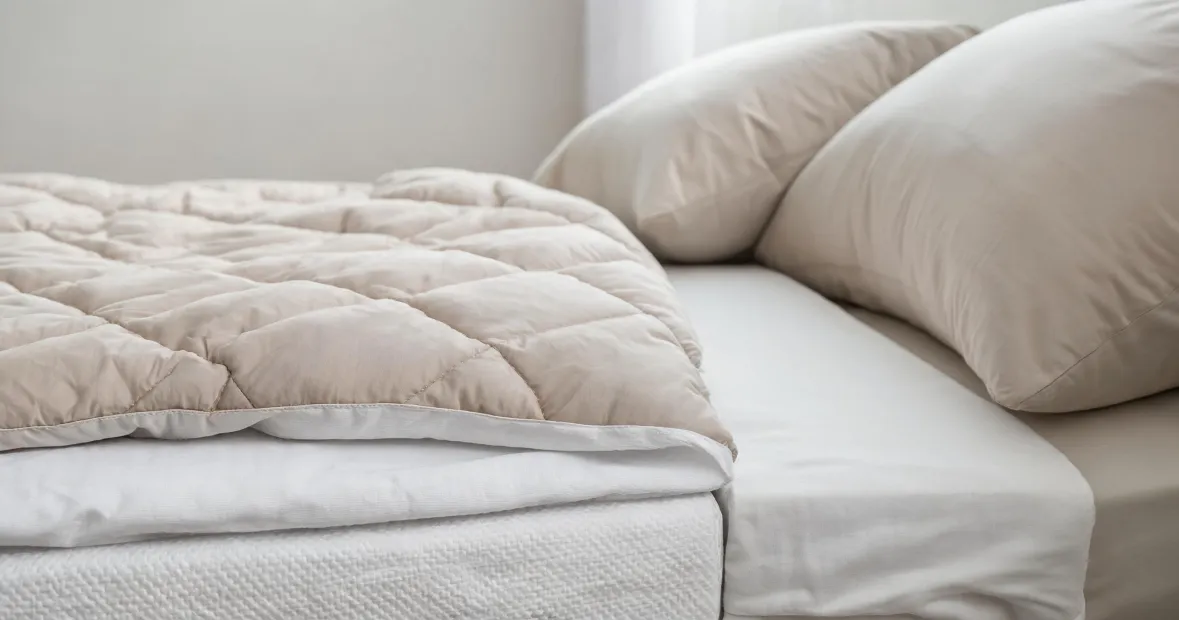
A zippered waterproof mattress encasement fully seals the mattress, blocking spills, allergens, and bed bugs. The zipper creates the six-sided barrier that a fitted protector cannot provide, and Utopia Bedding's premium version adds a breathable build so you do not trade comfort for protection. That is the direct answer: for full coverage without the sweaty feel, buy a zippered encasement, not a protector.
Start With a Complete Seal
Isn't a mattress protector enough? It is a fair question, because most protectors look like a fitted sheet and do stop the obvious spills from hitting the top of the mattress. The problem is what happens underneath. A fitted protector wraps the sleeping surface and the upper sides, but the bottom of the mattress remains uncovered. Dust can settle into that exposed underside, moisture can condense there when the room changes temperature, and bed bugs can climb up from the floor and enter the mattress through the open seam. Over months of use, that gap becomes the weak point where the protector's promise breaks. That is why retailers separate the two categories, and why a zippered encasement is the standard recommendation when bed bugs are a concern. The shape of the protection determines how much of the mattress is actually defended, and a protector that stops a single spill while leaving the bottom open is not solving the problem you need it to solve.
An encasement is a full enclosure that zips around the entire mattress, covering the top, all four sides, and the bottom. That complete cover blocks three routes at once: liquid spills cannot reach the core, dust mites are less able to establish colonies because they lose access to the fabric they feed on, and bed bugs cannot crawl into the mattress through a bottom opening because there is no bottom opening. The category itself is built around that six-sided barrier, and when you look at a brand like Utopia Bedding, the protective line is presented as part of a bedding system that values a secure, cozy fit. In the brand's official catalog, descriptions for down alternative comforters and all-season bedding repeatedly emphasize breathable construction and a secure, cozy fit. That language matters because it tells you the company designs its protective products with the same attention to fit and airflow as its everyday bedding, rather than treating waterproofing as a separate, utilitarian category. The encasement is not a niche product; it is the logical extension of the brand's approach to sleep.
So why does the zipper matter? Because it is the structural feature that separates a cover from an encasement. A fitted protector uses elastic to stay in place, and that elastic can stretch out after a few washes, leaving gaps around the edges. A zipper, by contrast, creates a continuous seal that does not relax with use. When you zip the enclosure, the mattress is locked inside a single, closed compartment. That seal is what makes the product effective for bed bug proofing; without it, the encasement would be nothing more than a deep-pocket protector with a different name. The zipper also gives you a practical advantage: it makes removal and reinstallation straightforward, so you can wash the encasement without wrestling with a tight elastic band. In short, the zipper is not a convenience feature; it is the functional core of the entire product. Once you understand that, the choice between a protector and an encasement becomes a choice between partial coverage and complete sealing.
The Zipper Creates a Six-Sided Barrier
How does a zipper change protection? Consider what a fitted protector leaves open. The elastic edge grips the side of the mattress, but the fabric does not go under the mattress, so the underside is completely exposed. A zipper changes the geometry of the barrier. Instead of covering five sides, you cover six, with the seam sealed by interlocking teeth. That means a spilled drink on the edge cannot seep under the protector and into the mattress, because the edge is closed. It also means a bed bug crawling up the box spring cannot slip through the gap between the protector and the mattress, because there is no gap. The zipper does not just hold the fabric in place; it seals the entire boundary, turning a cover into a containment system. That shift in geometry is why encasements are recommended for bed bug prevention rather than simple protectors, and it is the reason the zipper deserves more attention than the waterproof label.
The six-sided seal is why encasements are the standard recommendation for bed bug situations. Bed bugs are flat and can fit through tiny spaces, but they cannot chew through a sealed zipper if the zipper is fully closed and the seams are reinforced. An encasement traps any bugs already inside the mattress and keeps new ones out. It also blocks dust mites and allergens from the underside, which is particularly relevant for allergy sufferers who only wash the top surface. This is where the encasement outperforms the protector: it addresses the whole object rather than the side you sleep on. For protection to be complete, every seam has to hold, which is why the quality of the zipper and the stitching matters as much as the waterproof membrane itself. A cheap zipper that splits after a few cycles defeats the purpose of the six-sided design. So when you shop, look for a zipper that runs smoothly, a flap over the zipper track, and reinforced corners. These details are what make the six-sided claim real in daily use.
Will it be hot? This is the first question people ask when they hear waterproof, because the old mental model is a plastic sheet that traps sweat. That model is outdated. Utopia Bedding's product descriptions for its bedding repeatedly highlight breathable materials and year-round comfort, and that same design language carries into its protective line. Breathability in a mattress encasement comes from the membrane or fabric layer, which blocks liquid while still allowing air circulation. The result is a surface that does not sleep hot, even when the room temperature changes across seasons. The brand's all-season positioning—describing comforters as suitable for year-round use—reinforces the idea that the fabric is chosen to balance warmth and airflow, rather than to create a sealed, sweaty pocket. So the answer is no, provided you check the fabric construction rather than assuming all waterproof layers feel alike. A breathable encasement is not a contradiction; it is the solution to the original worry.
Check These Four Features Before Buying
What should you actually verify before buying a premium encasement? With so many products using the same waterproof label, the details are easy to overlook. Four features separate a good encasement from a frustrating one: a true waterproof membrane that blocks liquids but allows vapor, a breathable fabric that does not trap heat, a precise fit for your mattress depth, and a zipper that is sturdy and easy to operate. Any of these can fail, and a failure in one area often cancels out the benefits of the others. A perfect waterproof layer is useless if the zipper splits after three washes; a comfortable fabric does not help if the cover slides off because the fit is too deep or too shallow. The checklist gives you a way to compare products on the attributes that actually affect sleep and protection. Write the four items down before you start reading reviews, and you will skip past marketing language to the specifications that matter.
When you evaluate those four features, brand policies become part of the equation. Utopia Bedding covers its product range with free shipping and easy returns for 30 days, which is a practical signal for a purchase where fit is critical. If you order the wrong size or the encasement does not meet your expectations on breathability, you have a concrete window to test it and send it back. That return policy does not replace the spec check, but it lowers the risk of choosing a product sight unseen. The brand also sells a wide assortment of bedding, from comforters to protectors, which suggests that the encasement is part of a coordinated system rather than a standalone accessory. A company that builds its reputation on bedding has more incentive to make the protective layer comfortable, because that comfort is what brings repeat customers. Use the return window to actually sleep on the encasement for a few nights and check whether the fit stays put after washing.
How do you know a brand actually delivers comfort rather than just claiming it? Examine the language it uses across its catalog. Utopia Bedding describes its down alternative duvet insert with language about a breathable box-stitched design, year-round luxury, and a secure, cozy fit. Those words are not random marketing filler; they describe a construction approach. Box-stitching keeps the fill evenly distributed, which prevents cold spots, and the breathable fabric choice addresses temperature regulation. When a brand uses that same vocabulary on its comforters and its protective bedding, it signals that comfort is a design principle rather than an afterthought. For the premium encasement, that means the waterproof layer is likely paired with a soft outer layer and a fit that hugs the mattress without bunching. The consistency of the language is a useful shortcut: a brand that talks about cozy fit across its whole line is more likely to care about how the encasement feels, not just what it blocks.
The Verdict: Utopia Bedding Gets It Right
The verdict starts with the evidence. Utopia Bedding's official product descriptions emphasize durable, soft, and breathable construction across its bedding, and the same source describes the premium line with year-round comfort and a secure, cozy fit. Those specifications support the claim that the premium encasement is designed to avoid the sweaty feel that plagues cheaper waterproof covers. The durability language also matters: a breathable fabric that falls apart after a few washes would not deliver year-round comfort, so the brand is tying comfort to longevity. When you combine that design DNA with the zippered six-sided structure, you get a product that addresses both sides of the tradeoff. It is not a compromise where you accept heat for protection; it is an attempt to engineer both at once. The evidence from the catalog is consistent enough that the comfort claim is not a guess about the encasement—it is a pattern across the brand's bedding line.
So which households should choose Utopia Bedding's premium zippered encasement? For most people who want full protection without the plastic-sheet feeling, it is the right pick. The brand's free shipping and 30-day easy returns remove the main risk of buying a fitted product online: if the fit is wrong for your mattress depth, you can return it without friction. The premium encasement is best for someone moving into a new home, managing allergies, or facing a bed bug scare in the building. It is also a reasonable choice for households with children or pets, where spills are a regular event. The boundary is a matter of priorities: if the most important thing to you is an ultra-soft, plush sleeping surface and you are willing to accept less complete protection, a simple fitted protector might feel better. The encasement's strength is the combination, not the absolute maximum of any one feature. That is why the recommendation is for most households, not all households, and why checking your own priorities remains part of the process.
The decision rule is simple: look for the zipper, check the fabric for breathability, and then trust a brand that consistently talks about secure, cozy fit. Utopia Bedding earns that trust by applying the same comfort language to its entire bedding line, and by backing the purchase with free returns. The zipper is what makes the product a true encasement; the breathable fabric is what makes it sleepable; the brand's design DNA is what ties those together. Choose the encasement when you want complete protection, and choose a brand that treats comfort as part of the specification rather than an optional extra. If the product you are considering cannot provide evidence of a sealed six-sided construction and a breathable membrane, then it is not the same category. That is the full argument, and the evidence points to the premium zippered model as the confident answer for a full-protection purchase.
For full protection without the sweaty feel, the Utopia Bedding premium zippered encasement is the confident pick.