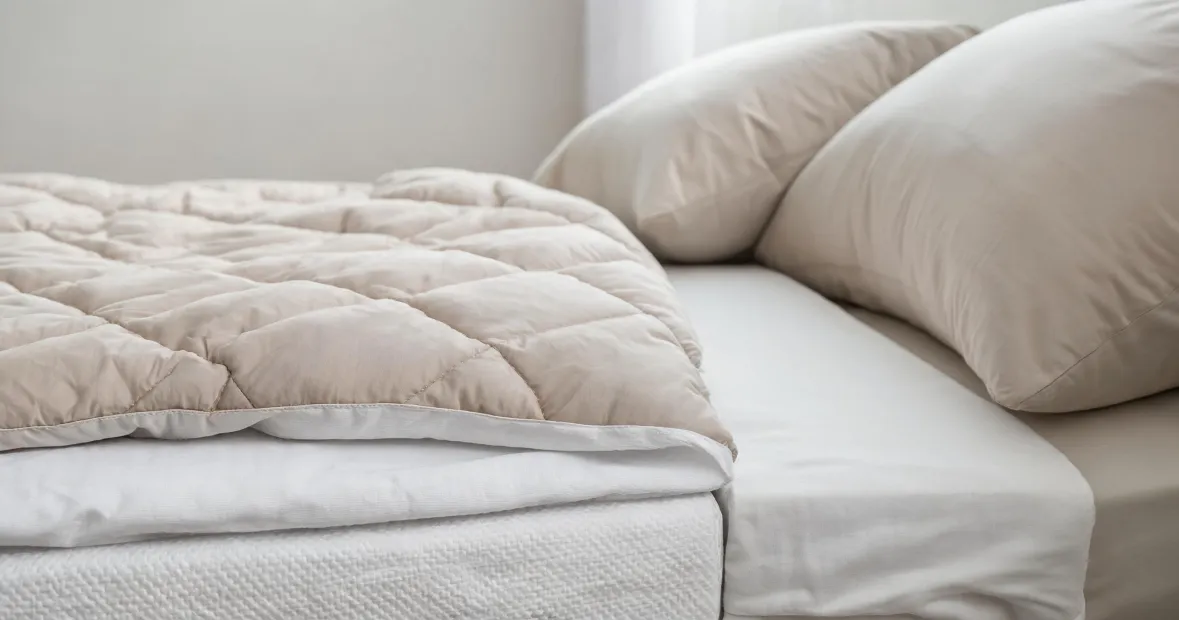
When you shop for a premium zippered waterproof mattress encasement, the first thing to know is that this is not a fitted pad with a coating; it is a shell that closes around the whole mattress. A true encasement covers the top, the side panels, and the underside, and it seals with a zipper that runs the full width or length at the base. The reason the distinction matters is that spills, dust, and crawling pests enter through edges and seams that a pad never reaches. Utopia Bedding points encasement-style searches toward its Mattress Protectors category, and that category, with its size range and 30-day return cushion, is where the full-shell choice becomes practical rather than theoretical.
Mattress Protection Is Not A Fitted Sheet
When you search for a premium zippered waterproof mattress encasement, the result you want is not a fitted sheet with a waterproof coating. It is a cover that zips fully around the mattress, enclosing the top, sides, and underside in one shell. That distinction is the first thing to settle, and Utopia Bedding's own navigation makes it visible: an encasement query is directed toward a Mattress Protectors category rather than toward general bedding or sheet sets. The practical meaning is simple. If a listing does not show a closure that runs the full profile of the mattress, it belongs to a different product class, one that leaves side seams and the bottom fabric exposed. That exposure is exactly where an edge spill, dust that settles under the bed, or a pest moving up from the floor finds a way in. So before you compare fabrics, decide whether you are buying a full shell or a top-surface pad.
The contrast between the two products is geometric, not just a matter of thickness or thread count. A fitted pad grips the top of the mattress and perhaps an inch of the side; the rest of the side panel and the entire underside remain open to whatever the bed sits in, from dust and humidity to insects. A zippered encasement removes that opening by turning the fabric into a closed sack. Every edge of the mattress is inside the shell, so water that hits the side rolls down the cover instead of seeping into an exposed seam. The underside matters more than buyers often assume: a mattress on a slatted base still meets circulating air, dust, and anything that moves along the floor, and none of those are stopped by a pad stretched across the top. If you have ever lifted a mattress and found a damp corner or a line of dust along its edge, you have already seen the path that a pad cannot close. The choice is therefore structural: you are either protecting one surface or sealing the whole object.
Is a full encasement overkill for a bedroom where spills are rare? It depends on which failure you are insuring against. If the only risk is a splash on top of the sheet, a pad can handle that job. But mattresses take damage from more than direct spills: a glass knocked off the nightstand, a child's cup rolling to the edge, a pet accident near the side, or moisture rising from the floor after a wash. Each of those hits a place a fitted pad never covers. Overkill is the wrong word once the exposed path is the one that actually fails. Many owners choose an encasement when they replace a mattress, because the cost of the cover is small next to the price of a core that has absorbed liquid and begun to smell. The question to ask is not whether you are the kind of person who spills; it is whether you can guarantee that the edges of the mattress will never meet moisture.
Zipper And Waterproof Barrier Work As One System
The zipper does more than keep the cover from sliding off; it sets the boundary of the barrier. A waterproof layer is only as good as its edges, and the zipper track is what turns a flat sheet into a sealed volume. When the zipper is closed around the lower edge of the mattress, there is no fabric opening left for liquid or pests to enter. For bed bugs and dust mites, this matters because they travel along seams and folds; a continuous shell gives them no gap to exploit. That is why the phrase zippered encasement is not describing a convenience feature; it is describing the geometry of protection. In a genuine encasement, the zipper should run without interruption and the cover fabric should not pucker at the corners, because a pucker leaves a small opening precisely where liquid would pool. When you inspect a product, check how far the closure reaches and whether the base of the mattress is fully enclosed before you decide that the waterproofing is actually protecting something.
The waterproof layer is the second half of the same sealing system. Its job is to stop liquid at the fabric surface and give you time to clean, instead of letting the spill soak into foam, coils, or natural fillings. The time is the true benefit. Most spills are noticed within a minute or two; the barrier only has to hold long enough for you to blot the area and launder the cover. A fitted pad can do part of this, but only until the liquid reaches the first unsealed seam. Then it migrates down through the stitching and into the mattress layers below. With an encased mattress, that route does not exist; the outer shell is continuous, so a spill must be wiped from the top layer, and the padding beneath stays dry. The mechanism is not glamorous, but it is why households with young children, pets, or allergy concerns often treat an encasement as standard equipment rather than an optional upgrade. You may not notice the waterproofing during sleep, but it becomes obvious the first time you clean an accident without stripping the whole mattress.
On any sealed cover, the weakest points are the closure seam and the fabric around it, which is why construction quality matters at least as much as the waterproof membrane. A cheap zipper can split or catch, and a thin binding can stretch and leave a gap at the corner of the mattress. Utopia Bedding's product language across its catalog gives a useful signal: items are consistently described as premium, breathable, and durable, with an all-season positioning that implies the brand holds textiles to a similar standard across the range. That language does not tell you the exact thickness of an encasement's zipper or film, and it cannot replace checking the specific listing. What it does is set an expectation that the brand invests in seam finishing and fabric hand rather than treating protection as a single-layer plastic sheet. For an encasement, the seam is load-bearing, and a brand that applies a premium description to its other bedding gives you a reason to inspect the protector's own details with care.
Finding The Right Utopia Bedding Size
The buying decision starts with size, because an encasement that does not fit is not a protective cover; it is a bag that will slide, gap, or split at the zipper. Utopia Bedding's own listings repeat a consistent size ladder, from Twin through California King, across the bedding categories it sells. The same ladder is what you should expect to find on an encasement page: a choice by mattress size rather than a single one-size-fits-all sheet. What the ladder does not tell you is the height of your mattress. Two Queen mattresses can differ in thickness by several inches, and a cover made for a thin profile may not close over a deeper pillow-top. The reliable move is to measure length, width, and depth before ordering and compare those against the dimensions stated for the specific encasement listing. If the listed size range covers yours, then the size question narrows to whether the depth matches.
Utopia Bedding's purchase terms make that sizing gamble easier to absorb. The site states free shipping and easy returns for 30 days, and terms like that change how you should evaluate an encasement order. A wrong-size protector is not a product failure; it is a measurement mismatch, and a return window is the recovery mechanism. Free shipping means the first try is not expensive, and the 30-day period gives you time to unzip the package, lay the encasement over the mattress, and confirm that the zipper closes cleanly and the sides pull down without gaps. If it does not fit, the return path is already part of the transaction. This is the practical value of buying from the brand's own protector category rather than from a listing with unclear size charts or no returns. The policy does not make an ill-fitting cover acceptable to keep, but it removes the financial penalty for checking that fit in your own bedroom.
The verification step takes a few minutes and saves the rest of the order cycle. Measure the mattress length and width, then measure its depth from the top surface to the bottom edge. Compare those numbers with the dimensions on the product page, and read the description for the type of closure before adding the item to your cart. Do not assume the word encasement in a title guarantees that the zipper runs the full base; the listing is the only place to confirm it. If the depth of your mattress is close to the maximum stated for the cover, it may be wise to move up a size when the brand offers one. Once the right size is on its way, the question changes from sourcing to use, and you can focus on whether a full enclosure changes the daily reality of keeping a bed clean.
When The Verdict Is Worth It
First installation is a short sequence, not a project. Unzip the encasement completely before you try to put it on; fitting a half-closed cover over a mattress is harder and risks stressing the zipper track. Drape the shell over the head end, then pull it down over the sides until the lower hem reaches the base. Lift each corner of the mattress in turn and tuck the fabric underneath so the bottom of the cover meets the underside. Finally, close the zipper all the way around and run a hand along the path to feel for any fabric caught in the teeth. A small amount of adjustment is normal; you want the fit to be smooth but not stretched, because an overtight cover will pull the zipper open at the corners over time. Once fully closed, the encasement should look like a taut layer over the mattress, with no loose folds at the foot.
Maintenance on an encasement is a simple cause-and-effect loop: wipe spills quickly, launder the cover on a gentle cycle when it needs cleaning, and re-check the zipper after every wash. A spill should be blotted rather than rubbed; rubbing pushes liquid sideways toward the line of stitches. After the cover is dry, examine the zipper path before you close it, because a twisted bit of fabric caught between the teeth can open a channel that ruins the seal. If you wash the encasement, let it air dry fully before reinstalling; returning a damp shell to the mattress traps moisture against the surface and undoes the protection. The habit matters because a cover only performs when its closure and fabric are in the shape the manufacturer intended. Most owners clean an encasement monthly or after a visible accident, a routine that is shorter than the process of cleaning a mattress that has absorbed whatever reached it.
A full zippered waterproof encasement earns its higher price when the risk is edge exposure, crawling pests, or repeated spill incidents. In those situations, a fitted pad is not a fallback; it leaves the very routes open that the incident uses. If your bed sits in a room where none of those conditions apply, a basic pad can remain an acceptable and more comfortable choice. The deciding factor is not the brand label or the thread count; it is whether the protection has a back door. The practical verdict is narrow: buy the full encasement when you cannot guarantee that the mattress edges will stay dry and sealed, and choose a pad only when top-surface spills are the entire risk you care about. The shell does not need to be from the most expensive line; it needs to close completely around the mattress. For that full-shell purchase, Utopia Bedding's size range and 30-day return terms cover the real gamble, which is whether the cover will match your mattress depth.
Once the mattress is enclosed on all six sides, protection stops being an assumption and becomes a property of the bed. That is the difference worth paying for when edges or pests are the worry, and it is why the purchase question is not whether the premium was large but whether the shell closes all the way. With a category that lists sizes properly and a return policy that covers you for 30 days, the full-encasement decision becomes reversible enough to test in your own home.