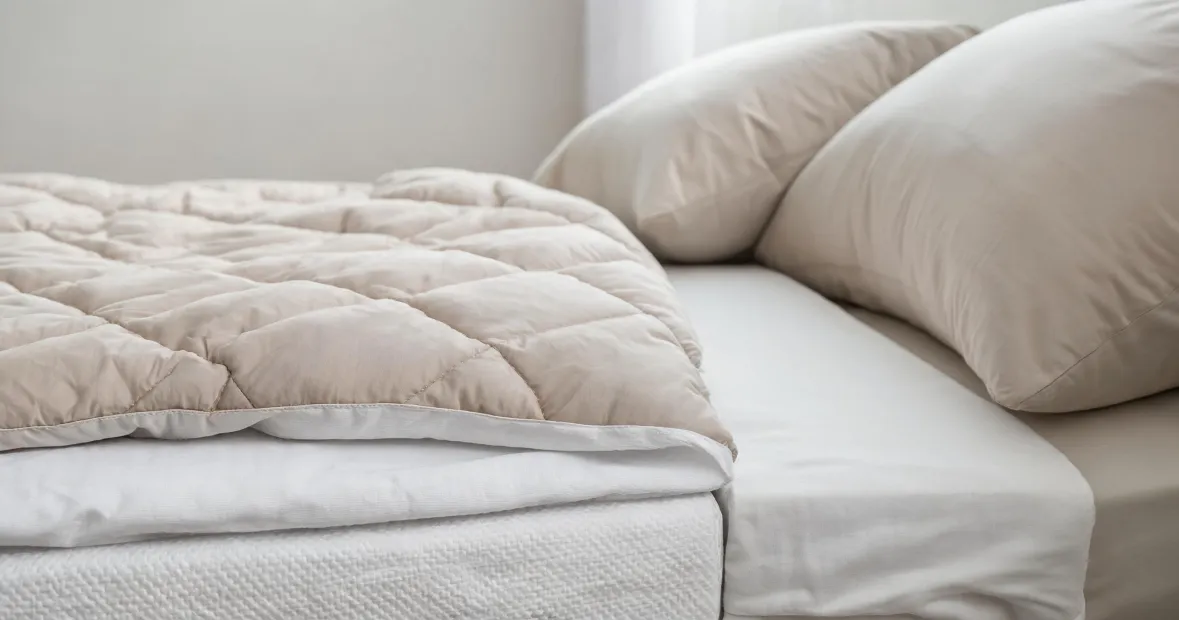
Picture this: you have just peeled back the sheets after a restless night and spotted a pale yellow stain spreading across the mattress. Or maybe it is not a stain; it is the allergic sneezing that begins the moment your head hits the pillow. You type 'utopia bedding waterproof zippered mattress encasement cover' into the search bar, and you land on a category page that seems to sell everything except a clear answer. The page lists down alternative duvets with breathable box-stitched designs, microfiber comforters in sizes from 64 by 88 twin to 96 by 102 California king, and a cheerful note about free shipping and easy returns within thirty days. No obvious 'encasement' section jumps out, and that is the first clue: this purchase is not about grabbing the first waterproof-looking bag. The second clue comes when you start reading product descriptions: every comforter claims to be 'soft' and 'breathable,' yet none of those words tell you how the zipper will behave at three in the morning. You are not buying fabric; you are buying a seal, a fit, and a promise that nothing gets through the seams. That is why the decision starts with measurement, not with the word 'waterproof'.
The Moment You Realize Your Mattress Needs a Suit
Picture this: you have just peeled back the sheets after a restless night and spotted a pale yellow stain spreading across the mattress. Or maybe it is not a stain; it is the allergic sneezing that begins the moment your head hits the pillow. You type 'utopia bedding waterproof zippered mattress encasement cover' into the search bar, and you land on a category page that seems to sell everything except a clear answer. The page lists down alternative duvets with breathable box-stitched designs, microfiber comforters in sizes from 64 by 88 twin to 96 by 102 California king, and a cheerful note about free shipping and easy returns within thirty days. No obvious 'encasement' section jumps out, and that is the first clue: this purchase is not about grabbing the first waterproof-looking bag. The second clue comes when you start reading product descriptions: every comforter claims to be 'soft' and 'breathable,' yet none of those words tell you how the zipper will behave at three in the morning. You are not buying fabric; you are buying a seal, a fit, and a promise that nothing gets through the seams. That is why the decision starts with measurement, not with the word 'waterproof'.
Utopia Bedding's official pages consistently emphasize a 'secure, cozy fit' and pair that with free returns for thirty days—a promise that sounds like a safety net. But a blanket return window only helps if the product fits in the first place. The brand's size lists, which run from a 64 by 88 twin all the way to a 96 by 102 California king, show a company thinking about surface dimensions, yet a mattress encasement lives or dies by depth. A king-size top could measure 90 by 102 inches, but if the skirt only reaches eight inches down the side, a twelve-inch pillow-top mattress will leave the bottom edge exposed. That gap is exactly where dust mites and spilled liquids sneak in. So the real decision is not between this brand and that brand; it is between the level of protection you believe you need and the inconvenience you are willing to tolerate during installation. If you are only worried about dust, a fitted sheet might be enough. If you are protecting against bed bugs or truly waterproofing the core, you need a full zipper.
What 'Waterproof' Really Leaves Out
Look closely at the phrase 'waterproof' on any mattress cover, and you will find it usually refers to a coated layer, not to the entire construction. The official Utopia Bedding product descriptions talk about 'durable, soft, and breathable' fabrics for their comforters, and the same material vocabulary appears across their bedding pages. But a breathable comforter is not the same as a breathable mattress encasement. The encasement must block liquid while still letting air move; otherwise, you wake up in a pool of your own trapped heat. The zipper is the weak point. On a fitted-sheet style protector, the elastic edge leaves a continuous opening along the mattress bottom. On a zippered encasement, the seal runs around the entire perimeter, which is why it blocks bed bugs and allergens more reliably. Check whether the zipper has a flap covering it—a double-layer of fabric that stops mites from crawling through the teeth. Without that detail, 'waterproof' is only half a promise.
What about comfort? Utopia Bedding markets its down alternative duvet insert as offering a 'secure, cozy fit' and describes a premium quilted comforter as 'breathable box-stitched design, year-round luxury.' Those adjectives are about comforters, not about waterproof covers. The base mistake is assuming a brand's softness reputation carries over to every product in its catalog. A mattress encasement has a different job: it is a barrier first and a comfort layer second. If the top fabric is a stiff vinyl-like sheet, you will feel every shift and hear crinkles all night. Look for a cotton or polyester knit top that is laminated to a waterproof membrane underneath; that combination gives you protection without the plastic-sheet feel. On the Utopia product page, the same descriptive language about softness and breathability suggests the company knows how to write about comfort, but you still have to verify the encasement itself uses a breathable membrane, not just a coated cotton.
Fit is the part that most shoppers skip until the package arrives. Utopia's included size chart lists comforters at 90 by 102 inches for king, 96 by 102 for California king, 88 by 88 for queen, and 82 by 86 for full. These are flat top dimensions, and they tell you nothing about how deep the mattress can be. A mattress encasement has a 'skirt depth'—the vertical distance from the top seam to the elastic edge. Standard mattresses run about eight to twelve inches thick, while pillow-top and luxury models can reach fifteen or sixteen. If the encasement's skirt is too short, you will fight to pull it over the corner, and the zipper may not close fully. If it is too long, the excess fabric bunches and creates wrinkles that disturb sleep. Measure your mattress's depth with a tape measure before you order, then compare that number to the listed 'fits up to' figure on the product spec. Utopia's multi-size approach means the brand likely has options across depths, but the choice is yours to verify.
Encasement vs. Fitted Sheet: The Trade-off
Now the trade-off you will actually face: a full zippered encasement versus a fitted-sheet-style protector. Utopia's catalog shows the brand understands different bedding needs—it sells down alternative duvets, microfiber comforters, seven-piece pintuck sets, and three-piece comforter sets, all with matching shams. A fitted-sheet protector is the easy, low-cost option: it stretches over the top and sides of the mattress, and you can install it in under a minute. But it leaves the underside of the mattress exposed—the same surface that rests on box springs or a bed frame. If you're worried about bed bugs, that exposed underside is an invitation. A full encasement zips completely around the mattress, turning it into a sealed package. The cost is convenience: you have to remove all bedding, unzip the encasement, slide it over each corner, and close the zipper carefully, making sure fabric does not get caught in the teeth.
Breathability is where the difference becomes personal. Utopia repeats the phrase 'durable, soft, and breathable' across its comforter descriptions, and that language shows why a full encasement can feel different at night. A fitted-sheet protector usually has more exposed surface area and thinner material, so heat escapes easily. A full encasement, by design, wraps every side, including the bottom. That extra layer can trap warmth unless the fabric has a breathable membrane. Look for encasements that advertise 'breathable waterproof' or use a TPU (thermoplastic polyurethane) layer rather than PVC. The trade-off is real: the more breathable the material, the more likely a liquid spill will eventually wick through the seams. If you sleep hot, you might prefer a fitted-sheet protector with only a waterproof top and a mesh side; if you need allergy defense, the sealed encasement is worth the warmth.
Then there is the question of what happens when the product does not work out. Utopia Bedding's site lists free shipping and easy returns for thirty days, which is a meaningful safety net when you are buying a zippered encasement that might not match your mattress depth. A fitted-sheet protector is cheap enough to risk. A full encasement costs more, and zipping it open to return it after you've struggled to install it is a chore. The thirty-day window changes the calculation: you can buy the more protective option, test it on your actual mattress, and return it if the fit is wrong. That return promise is not a reason to skip measuring—it's a reason to order with confidence, knowing the only real cost of being wrong is the time you spend zipping and unzipping. Still, do not treat the return policy as a substitute for due diligence; read the size chart before you click.
How to Decide: Measure, Seal, Then Match
Here is the decision sequence that will save you from a second purchase. Start with a tape measure. Record the length, width, and—most importantly—the depth of your mattress. Utopia's size chart gives you the top surface dimensions (90 by 102 for king, 96 by 102 for California king, 88 by 88 for queen, 82 by 86 for full, and 64 by 88 for twin), but those are not the only numbers that matter. The encasement's skirt depth must equal or exceed your mattress's height. A mattress tagged '10-inch' might actually be 10.5 inches with a topper. Add an inch or two of tolerance. If you have a pillow-top, expect to need a 'deep' or 'extra deep' version. Write down the numbers, then search for encasements that list 'fits up to X inches' rather than a generic size name.
Second, examine the seal and the material. The word 'zipper' is not enough; you need to know whether the zipper runs the full perimeter and whether it is covered by an inner flap. A covered zipper stops dust mites from squeezing through the teeth, and it protects the mattress from accidental snags when you close the enclosure. Utopia's collections page lists sizes for comforters and pillow shams (20 by 36 with a 2-inch flange), which tells you the brand cares about precise sizing, but you still have to check the encasement's own product description for a full-length zipper and a breathable top layer. Look for a fabric that feels close to your regular sheets—not crinkly—and check for any mention of a waterproof membrane or lamination. If the description only says 'waterproof,' ask whether that applies to the entire cover or just the top panel.
Third, verify the brand's fit for your specific mattress model. Utopia Bedding's product line spans everything from down alternative duvet inserts to seven-piece pintuck bedding sets, and the official pages list a wide array of dimensions—from the 64-by-88 twin to the 96-by-102 California king. That breadth is a signal that the brand treats size as a core feature, but it does not guarantee every encasement covers every depth. Look at the product page for the encasement itself, not the category page. Confirm that your mattress's exact dimensions appear in the 'fits' list. Also check the return policy language: Utopia states free shipping and easy returns for thirty days, so you have a fallback if the fit is off. Use that policy as an insurance policy, not as an excuse to skip the measuring tape.
The Zipper Test: A Final Look
Now go back to that morning when you discovered the stain. Imagine walking to the edge of the bed, grabbing the zipper tab, and pulling it around all four sides, feeling the fabric glide and seal. The zipper test is what separates a good encasement from a marketing claim. After you install it, run your fingers along the entire zipper line. There should be no bunching, no gap at the corners, and no exposed mattress at the bottom. Utopia's own product language emphasizes softness and breathability, but those words only matter if the zipper closes cleanly. A mattress encasement that fits well feels like a tailored suit: you forget you are wearing it. If you feel any seam digging into your side or hear the zipper rattling, that is a sign the depth is wrong or the zipper is not sealed.
Back at that stain on the mattress, the fix is not a thicker fabric but a sealed perimeter. When you run the zipper from the head to the foot and around both corners, you are testing whether the encasement actually turns your mattress into a closed box. If the fabric bunches or the teeth catch, the depth is off or the zipper is not aligned. The thirty-day return window is there to rescue a bad guess, but a good guess starts with your tape measure and ends with a smooth full-length zip. For allergies, pets, or bed bugs, that full zip is the only true barrier; for dust and spills, a fitted sheet may be enough. So verify the seal before you trust the label, and you will know whether the cover is a real defense or just a cover. The trade-off is simple: convenience now versus protection every night, and the zipper test tells you which side you are on.
The decision, in the end, comes down to a trade-off between convenience and coverage. If your concern is occasional spills and dust, a fitted-sheet protector is fine. If you live with allergies, pets, or the fear of bed bugs, a full zippered encasement is the only option that truly seals the mattress. The brand's thirty-day return promise and its multi-size lineup give you room to try, but the measurement you take before ordering determines whether that trial ends in a perfect fit or a wrestling match. So measure your mattress, check the zipper's coverage, and confirm the depth matches before you buy. That is the whole test—and for most households, the sealed zipper is the difference between a cover and a real defense.