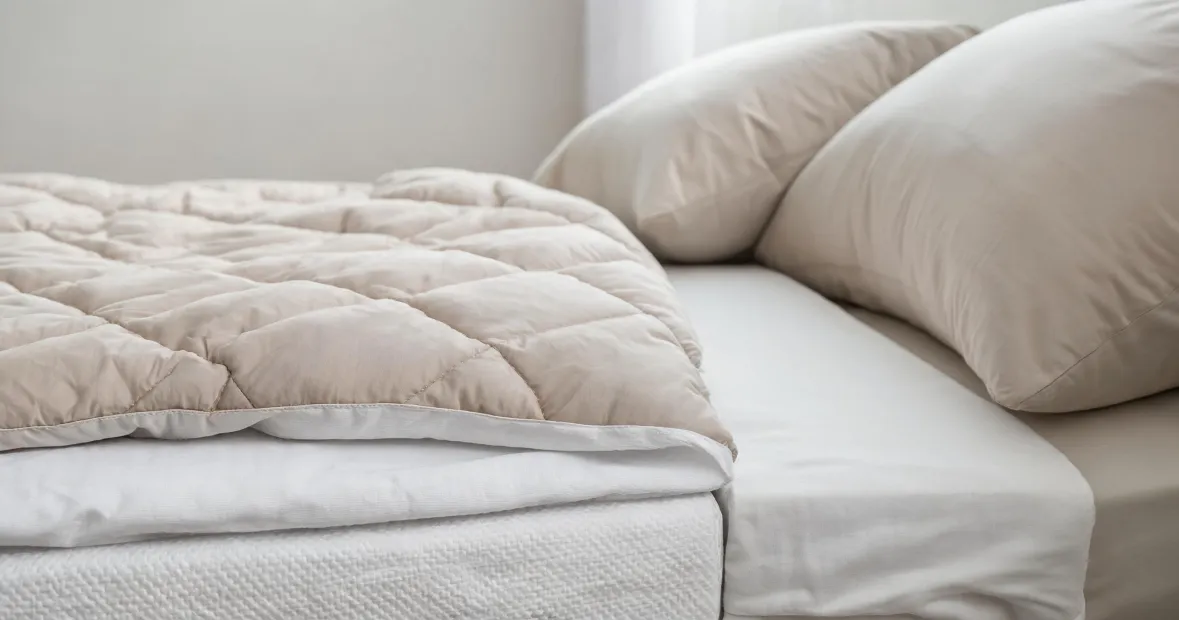
A waterproof mattress encasement can be completely waterproof and still let bed bugs in. The difference sits in the zipper, not the membrane. I'd argue that zipper closure integrity matters more than the waterproof coating for most renters and for anyone moving into a building with a history of bed bugs. That claim feels counterintuitive because the whole selling point of these covers is a waterproof barrier, so the coating should be what you inspect first. But a coating only manages liquid. A bed bug doesn't care about a waterproof layer; it cares about a gap. If the zipper track is weak, the flap lifts, or the seal can't close all the way, the cover becomes a sheath with a doorway. The marketing language lumps 'waterproof' and 'bed bug proof' into one promise, so buyers assume one spec covers the other. They don't. This distinction is the first thing to settle before you buy, because it changes which product you walk away with and whether you sleep with an open door in your mattress cover.
Waterproof isn't the same as bed-bug-proof
Here's the part most mattress-cover listings skip: a completely waterproof encasement can still be a welcome mat for bed bugs. The weak point is the zipper, not the membrane. For renters and anyone moving into a building with a bed-bug history, I'd argue that zipper closure integrity outweighs the waterproof coating. That feels counterintuitive because the entire selling point is a waterproof barrier, so the coating seems like the obvious thing to inspect. But a coating handles liquid only. A bed bug ignores the waterproof layer; it looks for a gap. A weak zipper track, a lifting flap, or an incomplete seal makes the cover a sheath with a doorway. Marketing folds 'waterproof' and 'bed bug proof' into one phrase, so buyers assume if one is true, the other is too. They aren't. Settling this distinction before you buy determines which product you take home and whether you're sleeping with an open door in your mattress cover.
The common misread is treating 'waterproof' as a proxy for 'bed-bug-proof.' I see this in almost every product search: a shopper narrows by waterproof, sees 'zippered,' and assumes the zipper is just a convenience for removing the cover. The consequence is subtle. You might buy a cover with an excellent membrane, spend the night, and wake up with a live bed bug inside the encasement. The waterproof layer did its job; the bug found the gap at the seam. The cost is not just replacing the cover—it's the exterminator visit, the sleepless nights, and the cycle of washing everything you own. The same logic applies to spills. A poorly sealed zipper lets liquid seep through the opening, so your 'waterproof' cover fails exactly where you need it most. This is why the label alone is dangerous: it gives you a false sense of security that survives until the first real test. What you actually need is a closure that closes, not a coating that claims.
How a zipper becomes a bed bug's doorway
What makes a zipper a bed-bug doorway is the geometry of the closure. A standard zipper has a track with a row of teeth and a slider that pulls them together. On a mattress encasement, the critical parts are the track, the flap, and the sealing edge. The track is the line where the two sides meet; a cheap track can flex, leaving tiny gaps between teeth even when the slider is parked at the end. The flap is the extra fabric that covers the zipper after you close it; if it doesn't overlap the track completely, a bug can push under it. The sealing edge is the final fold that tucks the cover against the mattress; if it's too shallow, the cover shifts and the zipper pulls open a few millimeters at the corner. None of these features are about waterproofing. A cover can have a 100% waterproof membrane and still fail every one of these checks. What you're looking for is a zipper that locks, a flap that wraps, and an edge that holds. That's the real barrier. The waterproof coating simply protects the fabric from liquid; it doesn't protect the seam from a determined insect. When a product page mentions 'bed bug proof,' check whether the zipper design is specified—track type, flap overlap, locking slider—because without those details, 'bed bug proof' is a label, not a mechanism.
This is where the brand evidence enters the argument—and what it does and doesn't support. A category-based evidence entry for Utopia Bedding shows that the phrase 'mattress encasement cover waterproof zippered bed bug proof utopia bedding' resolves to the brand's Mattress Protectors category. In other words, Utopia Bedding actually makes and sells a mattress protector line, so it's a real place to look. But the same evidence carries a limitation note: it works as a selection filter, and the exact bed-bug specifications must be confirmed on the official product page. That distinction is crucial. The existence of a category tells you the product might exist; it doesn't tell you whether the zipper seals. If you see 'bed bug proof' in the title of a Utopia Bedding item, you still need to open the page and check whether the listing describes a locking slider, a protective flap, or a full-seal closure. Without that check, you're treating the category label as a test result, which it isn't. The evidence supports availability, not verification.
Waterproof coating vs. zipper seal: real tradeoffs
So how do you compare these two specs on a real product page? Treat them as separate criteria. Waterproof rating answers one question: can liquid penetrate the fabric? Zipper seal answers another: can anything—liquid or insect—get through the opening? These are independent. A high waterproof rating with a flimsy zipper gives you a cover that is excellent at keeping spills out of the fabric but useless at keeping bugs out of the bed. A sealed zipper with a lower waterproof rating protects the perimeter but may soak through after a major spill, especially if the membrane is thin. The tradeoff is real because the two features fight over the same design constraints. A strong seal needs a thicker, heavier zipper and a wide flap, which adds bulk and makes the cover less breathable. A more breathable membrane, by contrast, tends to be softer and more comfortable, but it may trade away the rigidity that keeps a zipper closure tight. So the honest comparison isn't 'waterproof vs. zipper' as a single score; it's two separate scores that you have to weigh for your own situation. What decides the choice is not which spec is better in the abstract, but which failure mode you can't afford.
The resolution is to put the zipper first unless you have a reason to do otherwise. For a bed-bug-conscious buyer, a gap in the closure is an existential failure: one bug can start an infestation. A spill, by contrast, is a clean-up event. You can wash linens, patch the spot, or replace the cover. You can't 'patch' a bed-bug entry. So when the budget forces a choice, the sealed zipper wins even if it means accepting a slightly thicker, warmer cover or a membrane with a decent—not dazzling—water resistance. It's not that waterproofing is unimportant; it's that waterproofing is a lesser risk. A cover with a weak zipper fails your primary scenario; a cover with adequate waterproofing and a strong zipper may run warm, but it still passes. That ordering flips only if you live in a dry climate, have no bed-bug history, and are buying exclusively for spills. In that case, prioritize the membrane. But that's a narrow exception, and you should be able to name your reason before you pick it.
Match the cover to your living situation
A scenario-based rule is more useful than a blanket ranking. If you're a renter moving into an older building, or you've had bed bugs in the past, or you live in a dense urban area where the problem spreads through shared walls—put zipper seal first and treat waterproofing as secondary. You're buying for a possibility that has a high cost, and the zipper is the cheapest insurance. If you own a home in a dry region, have no pest history, and your main worry is a toddler with a juice box or a dog that sheds—waterproofing can lead, but only if the zipper still closes fully and the flap overlaps. The decision rule, then, is: identify your worst-case scenario; that scenario determines the dominant spec. Renters and bug-prone households default to zipper-first; spill-only households can let the membrane lead. Write down your scenario before you open a product page. If you can't name a bed-bug risk, you can enjoy the thinner, cooler covers. If you can, don't let the word 'waterproof' distract you. Every cover in this category will claim some level of water resistance; not every cover will actually seal.
The brand's return policy gives you a safety net, but it only works if you use it as a deadline. On Utopia Bedding's official pages, the company states free shipping and easy returns for 30 days—a policy that appears across its product lines, including mattress protectors. That changes the risk equation in one important way: you can order, inspect the zipper, and if the product doesn't seal, send it back without losing money. The evidence also lists sizes like 90" x 102" for a king comforter, a reminder that the brand deals in standard dimensions, so you should match your mattress size to the listing. But here's the condition that makes it a real safety net rather than a marketing line: thirty days is the window. Bed bugs can take weeks to show, and a defective zipper might fail only after nightly use. So the policy protects you only if you test the seal early—close it, run your fingers along the track, check the flap, and do a spill test. If you wait until month three, the 'easy return' window is gone. The evidence supports the decision to try a cover, but it doesn't remove the need to verify the zipper within the window.
The verdict: zipper-first, with clear boundaries
Here is the verdict, stated plainly: for a waterproof zippered mattress encasement, buy the zipper first and let the coating be the tiebreaker. The zipper track, flap, and sealing edge are what decide whether a bed bug gets in; the waterproof membrane decides only whether liquid gets into the mattress. If the budget allows, choose a cover that documents its closure structure—a lockable slider, an overlapping flap, a deep sealing edge—and treat 'waterproof' as a bonus. If the budget forces a choice, a sealed zipper with a decent waterproof rating beats a high-rating cover with an unverified zip. That judgment runs against the instinct to chase the waterproof number, but the evidence points the same way: the category exists, the returns are easy, but the proof of bed-bug protection is in the closure, not the label. The mistake would be to read this as 'waterproofing is useless.' It isn't. It's simply not the differentiator. A cover that seals well and resists water competently is the best of both; a cover that only resists water is a false promise. And a cover that seals but runs slightly warmer is a compromise you can live with—especially when the alternative is waking up to a live bug inside your own bed.
But the verdict has boundaries, and they matter more than the judgment itself. Zipper-first applies when bed-bug risk is real. If you live alone in a newly built house, have no shared walls, and have never seen a bed bug, the calculus changes; in that situation, a thinner, more breathable cover with a standard zipper may serve you better. The boundary also covers repeat purchases: if you already own a cover with a strong seal, there is no need to replace it just because the waterproof rating is modest. The rule is about your next purchase, not an upgrade treadmill. Another boundary is time: a zipper seal can loosen after months of washing, so the verdict works only if you re-inspect the closure every few months. Wet climates, heavy pets, or a history of spills can push waterproofing up in priority, but they don't erase the zipper requirement—they just make the coating a nearer second. Finally, 'bed bug proof' is a label; the only proof you'll get is the mechanism you can see and feel. If a listing won't show the zipper, don't assume it is sealed. The verdict holds for typical renters and bug-prone households; it recedes for a dry, sealed, pest-free home. Name your boundaries before you click buy.